Hospital Discharge Checklist: Getting Home Medical Equipment Set Up Before the Patient Arrives
Discharge day is chaotic. Nurses are reviewing medications, the case manager is arranging follow-ups, and somewhere in the middle someone mentions that Dad will need a walker, a shower chair, and probably a hospital bed. Then the discharge happens at 4 p.m. and nobody has arranged any of it.
This checklist is what we tell families in Downers Grove, Naperville, and across the western suburbs to do so that the equipment is already in the house when the patient walks (or wheels) through the door.
48 hours before discharge (or as soon as you know)
- Ask the care team directly: "What equipment will they need at home?" Don't wait for someone to volunteer it. Common items: hospital bed, wheelchair or transport chair, walker or rollator, bedside commode, shower chair or tub transfer bench, patient lift, oxygen, nebulizer.
- Ask the physical and occupational therapists — they usually have the clearest picture of what's actually needed for safe mobility at home.
- Get the name and phone number of the discharge planner / case manager. They're your point person.
- Tell the discharge planner you want to use Reliable Medical Equipment (630-929-0745, Downers Grove). Hospitals often have a default supplier, but you have the right to choose, and a local supplier with same-day delivery is usually faster.
- Gather insurance cards — Medicare, Medicare Advantage, Medicaid, supplemental, commercial. Photograph them.
24 hours before
- Confirm the physician's orders have been written for each piece of equipment. For Medicare, the order needs the diagnosis and the medical reason — ask the planner to send it to us directly.
- Call us with the patient's name, date of birth, insurance, delivery address, and the equipment list. We verify coverage on the call and tell you what you'll owe.
- Measure the home. Doorway widths (a standard wheelchair needs about 32"), hallway turns, the room where the bed will go, bathroom layout. Tell us about stairs.
- Decide where the bed goes. Ground floor is strongly preferred. Near a bathroom if possible. Access on both sides.
- Clear the path from the door to the bed and from the bed to the bathroom. Remove throw rugs — they're the #1 trip hazard for walker users.
Morning of discharge
- Confirm your delivery window with us. Our goal is to have everything set up before the patient arrives.
- Have someone at the house to receive the delivery and learn how to use the equipment. The caregiver who'll be helping day-to-day should be the one trained.
- Ask the hospital for a copy of the discharge instructions including weight-bearing restrictions and transfer precautions — our technician can set up the equipment to match.
At delivery — what our technician does
- Assembles and positions the hospital bed, attaches rails, tests all controls.
- Adjusts walker or rollator height to the patient (handles at wrist crease when standing).
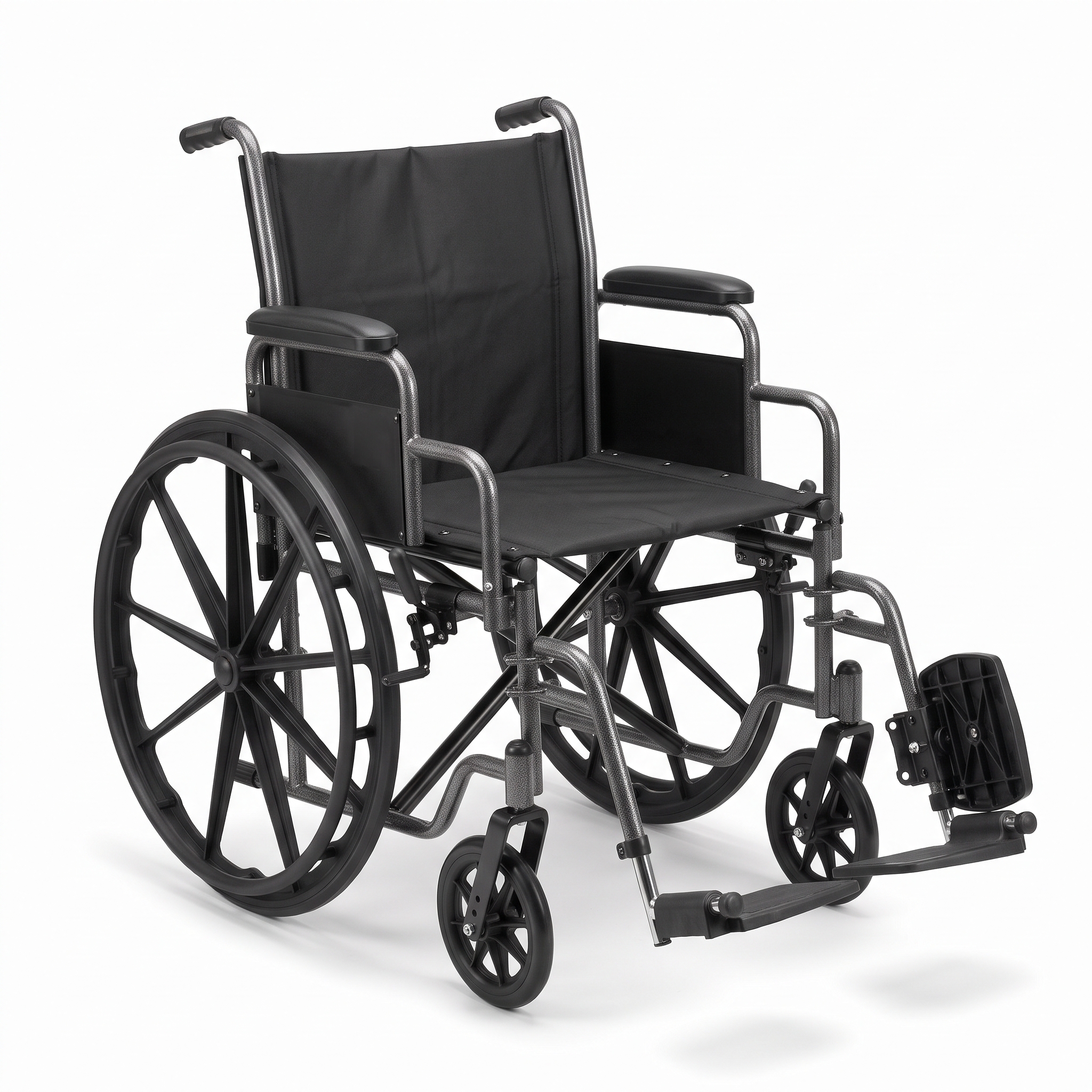
- Fits the wheelchair: seat width, footrest height, brakes.
- For patient lifts: sizes the sling and walks the caregiver through a full transfer.
- Installs bathroom safety equipment where requested.
- Leaves our number for 24/7 support.
Things people forget
- Bedside commode: Even with a nearby bathroom, a commode next to the bed prevents nighttime falls in the first weeks.
- Overbed table: Meals, medications, phone, water — all within reach.
- Bed alarm or baby monitor for patients with confusion or fall risk.
- Pressure-relief mattress if the patient will be in bed most of the day. Explore our support surfaces guide options.
- Grab bars and a raised toilet seat — inexpensive, high impact.
- Extension cords and surge protectors for electric beds, concentrators, and lifts — check outlet placement before delivery day.
What if insurance hasn't approved yet?
Discharges rarely wait for prior authorization. If Medicare Advantage or a commercial plan is slow, we'll tell you the private-pay rental cost so you can decide whether to start immediately and pursue reimbursement, or wait. We'd rather you have the equipment tonight and sort the paperwork tomorrow than have a fall on the first night home.
Print this, hand it to the discharge planner
Seriously — most of the delays we see come from one missing order or one unmeasured doorway. A single call to us 24 hours ahead resolves almost all of it.
Need equipment or have Medicare coverage questions?
Reliable Medical Equipment delivers same-day or next-day across Downers Grove, Naperville, Oak Brook, Bolingbrook, and DuPage County. We coordinate with your physician and bill Medicare directly.
Related Guides & Articles
Does Medicare Cover a Hospital Bed at Home? (Illinois Guide 2026)
Short answer: yes. Medicare Part B covers hospital beds as durable medical equipment (DME) when a doctor documents that you need one at home.
Same-Day Medical Equipment Delivery in the Chicago Suburbs: How It Works
The most stressful call we get sounds like this: "Mom is being discharged this afternoon and the hospital says she needs a hospital bed and a wheelchair before she can come home. Can you help?"